Mastering the Transverse Plane: The Hidden Architect of Movement, Posture, and Human Efficiency
Mastering the Transverse Plane: The Hidden Architect of Movement, Posture, and Human Efficiency
In the intricate landscape of human biomechanics, the transverse plane stands as a foundational axis that governs rotational movement, stability, and dynamic control. Often overshadowed by the more familiar sagittal and frontal planes, the transverse plane operates perpendicular to the body’s longitudinal axis, enabling movements such as twisting, internal/reversal, and multi-planar coordination essential for both athletic performance and everyday function. This underappreciated plane reveals how rotational forces integrate seamlessly into posture, mobility, and injury prevention—making it a pivotal focus for sports scientists, physical therapists, and rehabilitation specialists alike.
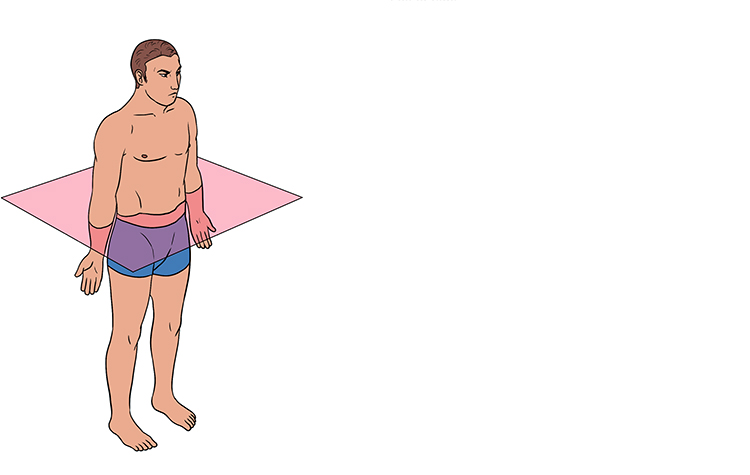
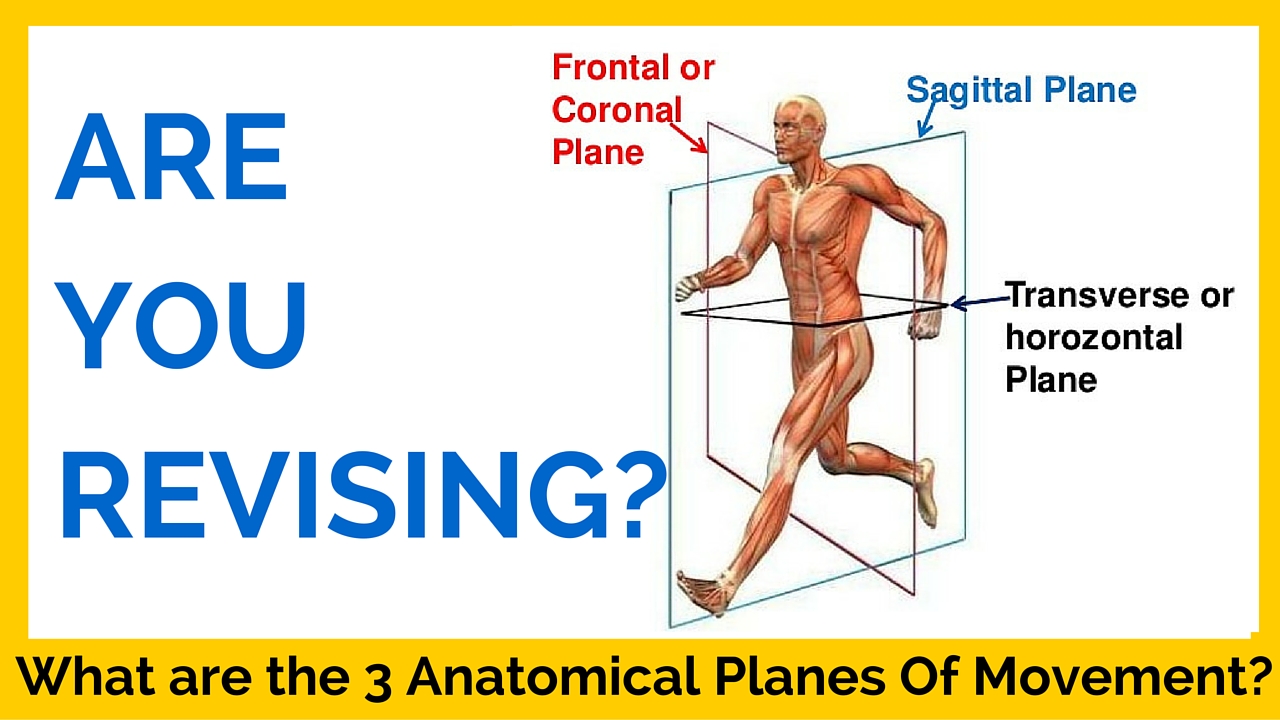
The transverse plane—defined as the plane that bisects the body sideways in coronal orientation—facilitates rotational motions that link joint articulation with muscular coordination. Unlike the sagittal plane, which governs forward-backward limb motion, and the frontal plane, which controls side-to-side movement, the transverse plane enables twisting and rotational control from the midsection outward. This capacity is critical in actions ranging from a golfer’s swing to a gymnast’s dismount, where rotation must be both precise and powerful.
At the core of transverse plane function is its relationship with core musculature.
The deep stabilizers—transversus abdominis, obliques, and multifidus—act as natural braces, generating intra-abdominal pressure and rotational tension around the torso. According to biomechanics expert Dr. Elizabeth Wiseman, “The transverse plane is not just about movement—it’s about control.
It’s the body’s internal torque generator, enabling controlled force transfer during dynamic activity.” Without robust engagement of these muscles, rotational efficiency drops, increasing strain on joints and connective tissues.
- Teaching Rotational Strength: Modern conditioning programs increasingly emphasize transverse plane training to improve rotational power. Exercises such as rotational medicine ball throws, cabling axial rotations, and anti-rotation planks target deep stabilizers and generate functional torque.
- Injury Prevention Mechanism: Weakness or instability in the transverse plane correlates with a higher incidence of lower back injuries, shoulder impingement, and hip dysfunction. Elite clinicians advocate integrating controlled rotational resistance early in rehab to rebuild balanced strength.
- Postural Correction Paradigm: Poor posture often stems from imbalanced musculature favoring sagittal plane dominance.
Addressing transverse plane deficiencies enables better spinal alignment during rotation, reducing chronic strain on paraspinal muscles and intervertebral discs.
Real-world applications extend beyond athletic performance. In daily life, simple actions like turning to check a rearview mirror or loading groceries from the trunk demand coordinated transverse motion. Physical therapists frequently highlight this plane’s role in functional independence—particularly among older adults—where preserved rotational control prevents falls and enhances quality of movement.
Clinical Insights from Leading Biomechanics Researchers Dr.James Carter, a professor of kinesiology at Stanford University, notes: “The transverse plane is the body’s true engine of integrated motion. When it operates optimally, everything from walking to lifting becomes efficient and safe. When compromised, compensation patterns cascade systemically.” Clinical studies confirm that patients undergoing targeted transverse plane intervention show improved rotation speed, reduced pain scores, and faster return to activity compared to those focusing solely on linear or sagittal training.
Training the transverse plane requires precision—overemphasis without adequate control breeds instability, while underutilization limits performance potential.
Best practices include:
- Start with isometric holds: Planks turned with rotational resistance develop tensegrity between deep core muscles and surrounding stabilizers.}
- Progress to dynamic anti-rotation drills: Using resistance bands or medicine balls to challenge control during unpredictable forces.}
- Incorporate functional motion patterns: Projects that mimic real-life rotation, such as controlled golf-stroke simulations or rotational-based rehabilitation protocols.}
Technology now enhances transverse plane assessment and training. Motion capture systems analyze rotational kinematics in milliseconds, allowing therapists to detect subtle control deficits invisible to the naked eye. Wearable sensors track intra-abdominal pressure and muscle activation timing, enabling personalized feedback loops for improved motor learning.
The transverse plane, though conceptually simple, represents a sophisticated layer of human motion that bridges mobility with stability.
Its role in rotational efficiency is non-negotiable—from high-level athletics to everyday vitality. As sports medicine and rehabilitation evolve, so too does understanding of this critical plane. Mastery of the transverse plane isn’t just a technical skill; it’s a cornerstone of resilient, adaptable movement capable of meeting life’s multidirectional demands.
In recognizing its power, practitioners unlock new pathways to human performance and longevity—one controlled rotation at a time.

Related Post

Pregnant Michelle Obama: A Visionary Journey Through Time
Paul Reubens: Peewee Herman’s Velocity Icon Dies at 70, Ends a Pub Crawl With Legacy That Endures</h2> In a twilight marked by both cinematic memory and untold facets of his life, Paul Reubens, the man behind the slobbery, eccentric, and outspoken Peewee Herman, passed away at 70. Known for redefining childhood rebellion on screen, Reubens’ death closes a chapter in American pop culture, one that blended vulgar humor with heartfelt authenticity. Once a household name from the 1980 hit film, his legacy extends far beyond the red-and-white striped shorts, now inseparable from the character who captured a generation’s cantankerous charm. <p>Born in Baltimore, Maryland, in 1952, Reubens emerged not just as an actor but as a performer unafraid of pushing boundaries. His embodiment of Peewee Herman—a defiant, snarly-haired antihero—blended physical comedy with sharp, streetwise dialogue that struck a chord with audiences hungry for authenticity. The Peewee Herman series, though commercially successful, often overshadowed Reubens’ broader artistic range. Few realize he appeared in Broadway plays, voice acting, and even avant-garde theater, proving his talents extended well beyond children’s television. As *Chicago Sun-Times* noted in its obituary, “Reubens was more than a child star—he was a performer who leveraged innocence into subversion.” <h3>A Career Built on Risk and Voice</h3> Reubens’ early career was defined by bold choices. Before Peewee, he starred in off-Broadway productions such as *The Spook Who Sat by the Door*, where his dramatic range simmered beneath the surface, hinting at complexity beneath the goof. With Peewee Herman, launched in 1985, he abandoned subtlety entirely: “Make them laugh, make them weird, make them remember,” Reubens once said, capturing the essence of his performative philosophy. The character’s signature voice—raspy, gravelly, dripping with sass—became iconic, a vocal signature recognized by millions. <p>The 1980s explosion of Peewee Herman’s films turned Reubens into a curious cultural paradox: a serious actor whose most beloved role was pure absurdity. Yet, in interviews, he insisted his performance was deliberate—a nuanced portrait of teenage defiance. “I didn’t play a cartoon character,” he explained. “I played a version of me—rough around the edges, protective of friends, screwed up, but loyal.” This authenticity resonated in an era increasingly skeptical of artificial corporate branding, making Peewee’s appeal timeless. <h2>Personal Life and Shadows Beyond the Spotlight</h2> Beyond the screen, Reubens navigated a life marked by both acclaim and private complexity. Always a confessed fan of rock ’n’ roll and jazz, his persona extended into music and visual art, though these pursuits rarely entered mainstream discourse. He resided in New York’s Greenwich Village, a neighborhood steeped in artistic tradition, maintaining long-standing friendships with peers across disciplines. <p>Despite the glare of fame, Reubens valued privacy fiercely. The Velvet Crimeoclub — a performance space and cultural hub — served as a sanctuary where he entertained trusted artists and writers. In rare public appearances, he spoke candidly of battling creative stagnation and the weight of typecasting, once remarking, “People remember the mask, not the man.” Such reflections humanized the performer, revealing layers beneath the red-and-white attire. <h3>Leadership, Mentorship, and the Legacy of Peewee</h3> Reubens’ influence reached beyond performance into mentorship. He supported emerging artists through workshops and collaborative projects, particularly those exploring boundary-pushing storytelling. The Peewee Herman Archive, now studied in theater programs, illustrates how he transformed personal quirks into universal themes of identity and belonging. <p>The character became a cultural touchstone, symbolizing youthful rebellion and resilience, but Reubens resisted reducing himself to a symbol. “Herman isn’t me,” he clarified in *Sun-Times* features, “he’s a story I inherited—and a story I continue telling, oddly enough, decades later.” This duality—public icon, private craftsman—defined his enduring presence. <h2>Enduring Impact: Why Peewee Herman Still Slaps the Nerve</h2> Even after the curtain fell, Peewee Herman retains pulse in internet memes, fashion revivals, and genre homages. His snarl, “You ya ridiculous—bury me!” echoes in viral clips and social commentary. Yet Reubens’ true legacy lies not in viral fame but in the authenticity he brought to every role. <p>Critics and fans alike praised his ability to fuse humor with emotional truth. As theater historian Dr. Elena Park observed, “Reubens taught audiences that vulnerability and absurdity coexist. He made slobberness feel sincere.” Whether in a Intervals show, a Broadway curtain call, or a private art session, Paul Reubens remained fundamentally creative—too often typecast, never fully understood. <h1>Paul Reubens, Peewee Herman’s Velocity Icon Dies at 70 — Ends a Velocity Legacy That Never Grew Old

Streameast Oi: Revolutionizing Streaming with Ultra-Smooth OTT Delivery

Eric Von Haessler’s Wife: The Private Life Behind the Public Persona of a Tech Visionary